|
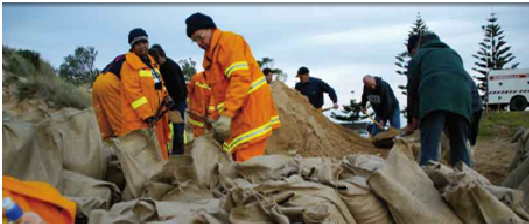
SES crew volunteers and even the willing public are being involved to help clean up and fix damages after the destruction of the floods and storms. Nearly 6,000 State Emergency Service (SES) volunteers, including crews from other states including Queensland, Victoria and the Australian Capital Territory worked in the affected areas and responded to over 10,000 calls for assistance. 28 prisoners from jails at Cessnock and St Heliers volunteered to help Emergency crews as they turn their efforts to the massive clean-up. “The inmates will be employed in cleaning up around various parks, toilet blocks and other public facilities, they will not be involved in cleaning up private homes and businesses,” said Attorney-General John Hatzistergos. Although many there are many helping hands during the clean-up there are never enough as the more helping people, the quicker the work gets done. The residents of the community were thankful for the willing inmates that helped during the clean-up but it is sensible of what General Hatzistergos said because even though the prison inmates are still under guard while cleaning up they still pose a threat towards the community. The aftermath of the floods and storms left great devastation in the small regional locations but the drive from the community’s spirit let the towns towards recovery.
Before, during and after the 2007 Hunter Valley floods, the local Governments, Communities and individuals acted responsibly and responded appropriately. During the stages where the floods and storms were still a hazard, local Government officials broadcasted warnings to the public. Most of the local residents responded appropriately to these warnings. During the stages of the disaster, 15,000 residents evacuated. The ones that didn’t were stranded on roofs and required helicopter food drops. After the disaster, the residents that lost their homes helped clean up neighboring houses and public areas. The majority of the community responding appropriately to warnings and precautions given by the local media apart from the few irresponsible individuals that were unfortunate enough to get killed during the disaster. It was quite surprising by the amount of community spirit there was after the floods, many willing people helped in the cleanup. It was good how the communities responded to warnings and evacuations given. The quicker and more efficient these warnings are abided and evacuations responded to, the more lives will be saved.
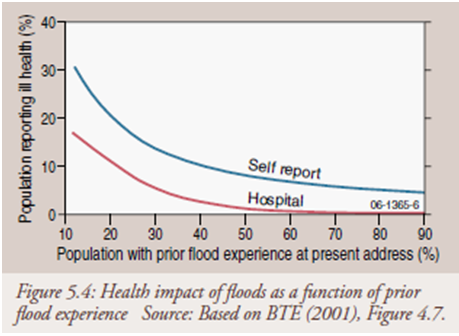
As seen in Source 2, the population that had been affected by the floods that have had no prior experiences have been reported with ill health. This clearly shows how previous experiences help you to understand nesassary precautions to take.
Many things are being done to manage the environment and sustain the impacts of what the floods and storms are doing to our environment. 140km’s of Levee banks and flood control structures are being built around all major rivers in the Hunter Valley area. A levee bank are the banks on the sides of rivers, these banks are heightened to prevent flooding. These Levee banks are one of the main things that prevent flooding, although there are 140 km’s of these levees being built many more need to be built. Building more levees on smaller rivers as well as the larger ones will help prevent erosion and smaller rivers need upgraded levees as well as larger rivers. More levee banks in smaller rivers as well as the large, main rivers will decrease the chance for floods to cause large amounts of damage.
After the 2007 Hunter Valley floods, an information kit was distributed to over 7,000 residents in flood prone Hunter Valley areas to help with preparation with other possible floods to come. The kit includes a DVD, featuring a computer simulation of what a 100-year flood event would do to Maitland today. The model actually proved to be a vital tool in the emergency management on the June 2007 floods in Maitland. The idea is that the kit is to show residents why they should increase speed of evacuations in these flood prone areas. This kit is a great idea as it shows the residents with a shocking simulation why they should evacuate quickly and improve protection of floods, by raising private levee heights (if they have them). Although the SES distributed over 7,000 of these kits, it should have to be delivered to all residents in the Hunter Valley area. The distribution of these kits will be a vital part of the evacuation of residents in future floods to come. It will save many lives.
|